


An Executive Q&A with Curvo’s Joe Jackson, Chief Customer Officer and Lauren Campbell, SVP Product Development
As hospitals and health systems face increasing pressure to capture every dollar, rebate management has emerged as a persistent challenge. The complexity of rebate management makes it difficult to validate assumptions with confidence, and the largely manual process leaves room for errors — to say nothing of taxing already thin resources.
Through conversations with supply chain leaders, Curvo has heard a clear demand for a better way to manage rebates. That input is helping shape the next evolution of its rebate management solution: a more modern, data-driven approach designed to bring greater visibility, predictability and confidence to a process that has historically relied on spreadsheets and inaccessible documentation.
In this Q&A, Curvo leaders discuss what they’re hearing from the market, why rebate visibility matters and how a more integrated approach could help healthcare organizations better understand what they’re owed.
Q: Why is rebate management such a challenge for hospitals and health systems today?
Joe: For many hospitals and health systems, rebate management is still very manual. On top of that, terms are buried in signed PDF contracts that are stored across shared drives with access limited to key individuals. It’s completely fragmented.
That makes it difficult to answer basic but important questions: Which rebates are due from which supplier and in what amount? When rebate checks do arrive, teams often don’t have an easy way to confirm whether the amount is correct or whether additional rebates are still owed. The challenge is not only collecting rebate dollars but also creating confidence that the organization understands what it is owed and why.

75% of healthcare supply chain leaders are not confident they’re collecting all rebate dollars owed to them.
Q: What causes missed rebate dollars most often?
Lauren: What we’re hearing from clients and the market is that the biggest challenges are lack of visibility and tracking errors. To Joe’s earlier point, this is such a manual process supported by antiquated tools like spreadsheets — and it’s one of a hundred things hospital staff have to do in a day, so it’s understandable that mistakes occur. Some hospitals choose to outsource rebate management, but that can open the organization up to even more risk, like missing compliance targets. Plus, it’s largely retrospective, so teams are then faced with having to chase down those dollars and then losing a percentage of any rebates captured to the vendor.
There’s also more of an overpayment risk. At first, an overpayment may seem like a good problem to have, but if a supplier later identifies the error and tries to claw back those funds, it can create a frustrating situation that disrupts operations. Accuracy is key.

76% of healthcare supply chain leaders cite data accuracy and visibility as the biggest improvement opportunity.
Q: What would a more modern rebate management process look like?
Joe: A modern rebate management process would bring contracts, purchasing data and rebate business rules into one system. That’s what we’ve strived to do with Rebate Optimizer — Curvo’s newest solution. What we're attempting to do with the software is automate the entire process: you load your contracts into the Curvo platform, configure the rebate business rules — and you have all your purchasing data inside one platform.
So, instead of relying on manual tracking, the system would match spend to the relevant contract terms and calculate the expected rebate based on the configured rules. For example, a user could select a purchasing time frame and contract, then see what the rebate should be based on actual spend and compliance criteria. A dashboard helps teams monitor who owes what, when it is owed, and whether payments received align with expectations.
Lauren: And it’s not just about preventing savings leakage or overpayments. Rebate visibility gives supply chain teams more context on the downstream financial impact of product conversions, supplier changes and volume shifts before decisions are made. Without that visibility, a team might shift volume away from a product or supplier and only later learn that the decision affected an expected rebate. An integrated, automated rebate solution gives supply chain leaders control, confidence — and time back in their already crowded days.
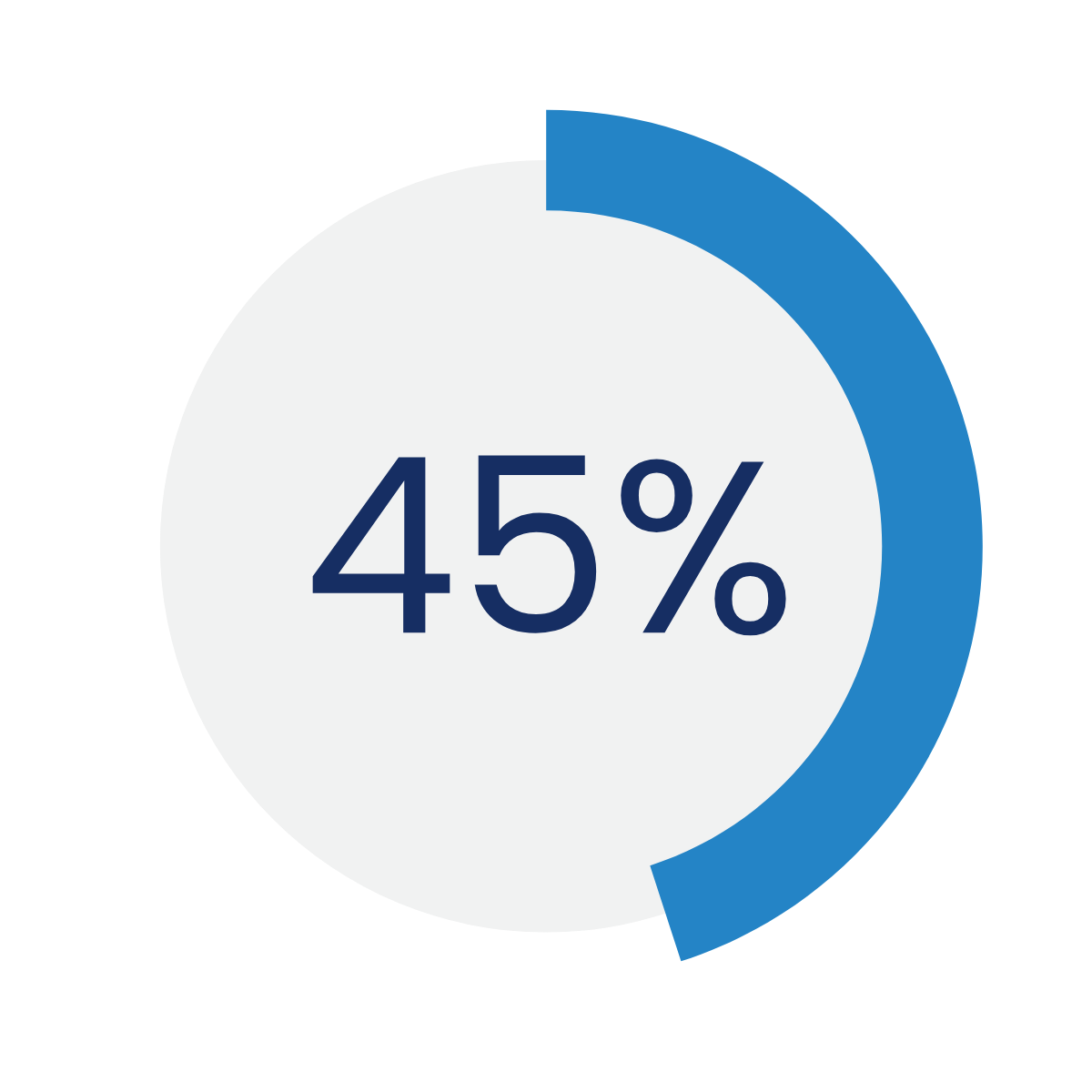
45% of healthcare supply chain leaders say they have 2-3 employees tracking rebate management.
Q: How could rebate intelligence support benchmarking?
Joe: Over time, rebate data could help organizations understand which categories tend to be rebate-heavy, which manufacturers commonly include rebates in agreements, and how peers structure rebate programs. That kind of intelligence could help health systems benchmark not just price or spend, but the full economic picture of a supplier agreement. It could also help identify rebate structures that are easier to track, manage and optimize.
Q: What does a health system need in place before digitizing rebate management?
Lauren: It does require some upfront implementation work. Health systems need to decide which contracts to include, how those contracts will be loaded, and how rebate rules will be configured. The process is definitely not “set it and forget it.” Teams need to dedicate resources to set up, validate and test. For example, if a contract pays a 5% rebate at 80% compliance and a 7% rebate at 85% compliance, those rules must be configured correctly so the system can calculate the expected rebate accurately.
But that’s part of the value of having a partner like Curvo. We collaborate with our clients’ implementation groups to provide the expertise and the people power.
Q: What’s the future of rebate management?
Joe: For Curvo and specifically for its Rebate Optimizer solution, the bigger vision is to move from rebate tracking to rebate certainty, predictability and optimization.
- Certainty means being able to tell hospital leadership that the organization is collecting the rebate dollars it is owed based on contract terms.
- Predictability means looking ahead based on current purchasing run rates to estimate what rebate value the organization should expect.
- Optimization means using rebate intelligence to inform decisions. For instance, if buying two additional units would move the organization into a higher rebate tier, the supply chain team could decide whether that purchase makes financial and operational sense.
Lauren: Looking ahead, data sharing could significantly change how hospitals and health systems approach sourcing decisions using rebate intelligence. As Curvo onboards more and more clients onto its rebate module, it can enable, to some degree, visibility to insights that points to trends, such as which categories are rebate-heavy or which manufacturers are most likely to include rebates in their agreement and even how clients are structuring those rebates.
I think Curvo Rebate Optimizer is the beginning of an industry shift – one that could potentially unlock what has essentially been a black box for healthcare.
Interested in learning more about Rebate Optimizer? Connect with our team to learn more.
Legal: Results aggregated from two separate surveys in the Fall of 2025 and Spring of 2026. Surveys were conducted by Curvo.